
I am a graphics software developer focused on physics-based rendering pipelines. I not only do solo-development, but I am also the Lead Programmer for the "Perkins Pirates Robotics" FRC Team (Team Number 7165).
Notably, I was honored as the OH-09 Congressional App Challenge Winner for my previous educational rendering sandbox, "Light Teachings". That project was the stepping stone to "Tempname: Engine".
Project Description
Overview & Features
Tempname: Engine is a GPU-rendering engine built for versatility, education, and stylized renders. Whereas most Engines throw you with 1 or 2 rendering engines to get images built for it, Tempname: Engine will have multiple renderers packed full with the tools you need to get the render just as you like it.
Engine architecture prioritized strict modular abstraction layers from day one to mitigate spaghetti-code vulnerabilities. Features a ruggedized asset pipeline supporting multi-format object representations (.obj, .mat, and multi-channel textures) seamlessly decoupled from execution render context structures.
Development Phase Tree
Project Stardance: Online Engine Demos
HackClub WorkspaceWebGL algorithmic verification scripts designed on Shadertoy to parse rendering mathematics prior to architectural C++ conversion loops.
Core Architecture & Project Stardance Mission
Engine System Blueprints
Visual layouts tracking the transition from decoupled backend proof-of-concepts to a unified execution pipeline. Click blueprints to inspect architecture layout contexts.
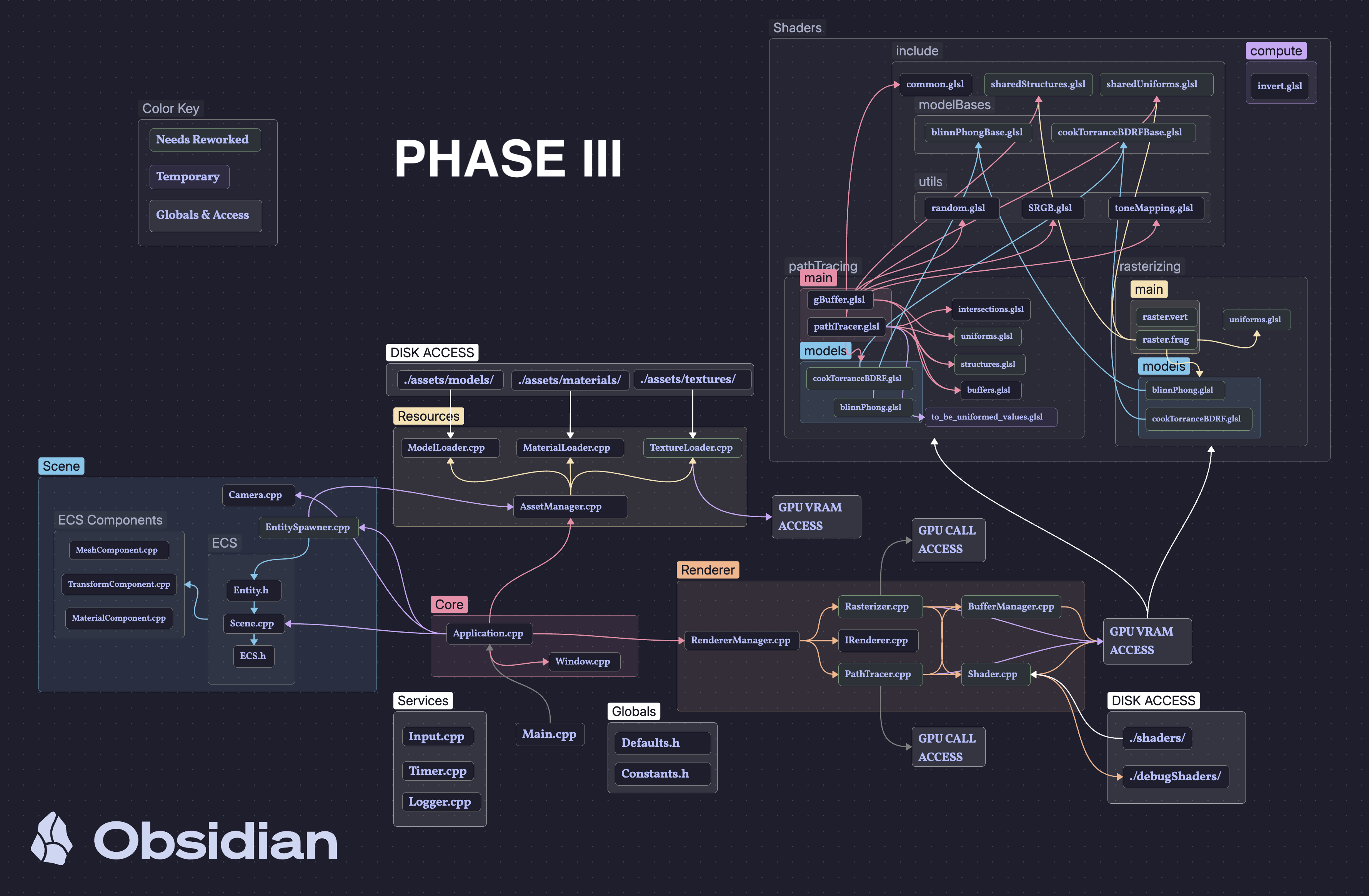
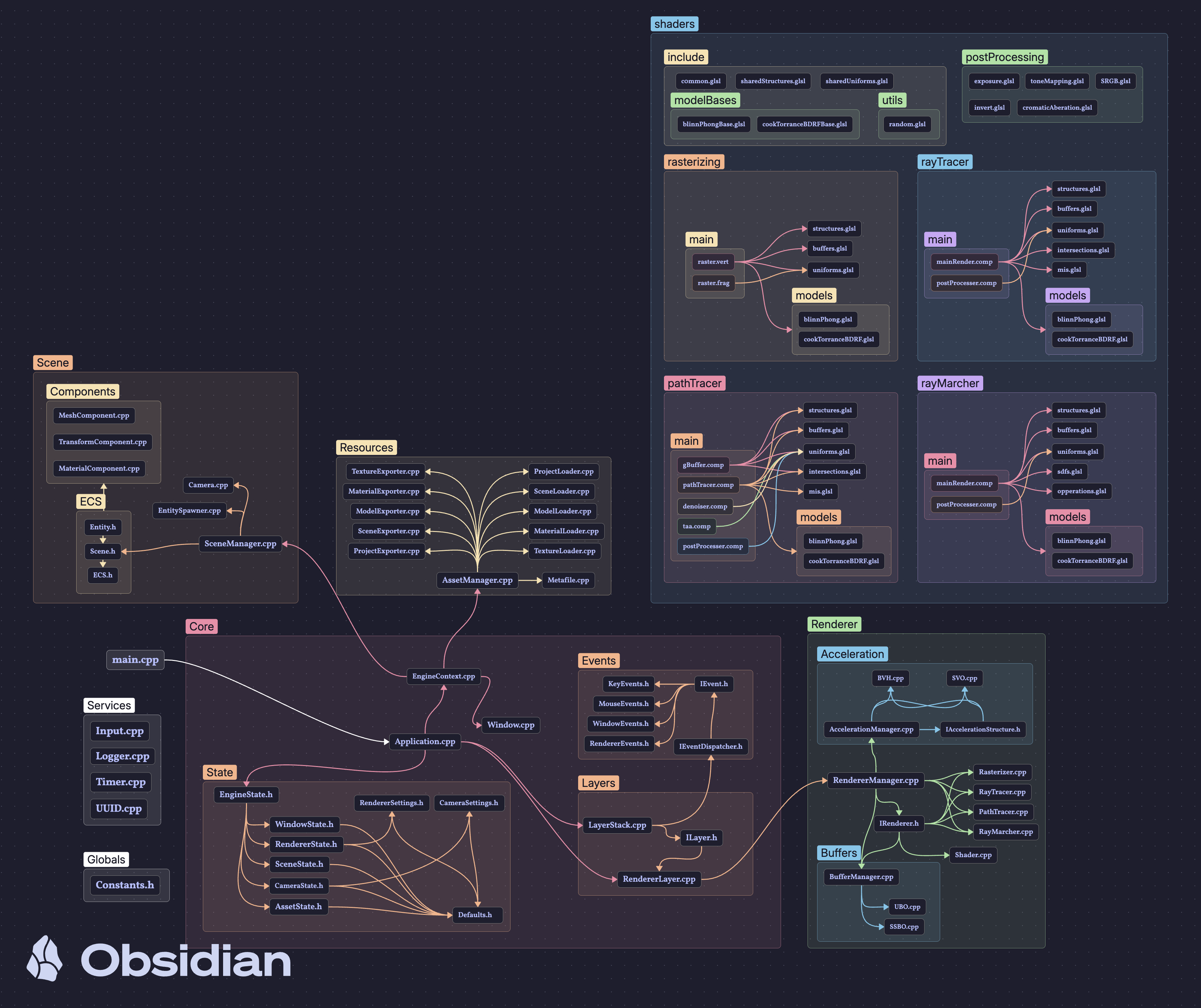
.obj
ingestion to frame-buffer composite layers.
Tech Stack & Dynamic Telemetry
Built with high-performance graphics libraries and tracked in real-time via Hack Club Hackatime throughout development.